Automatic Sliding Door For Nursing Home is essential nowadays. As they’re part of infection prevention, they shape how safely residents move. And they can either relieve your team during visitor peak times.
This guide is important for nursing home operations because you’ll learn what an automatic sliding door for nursing home use should actually deliver before you commit budget.

In nursing homes, the case for automation is rarely about convenience. It’s about removing recurring operational risks.
Entrance doors, ward doors, pantry doors and staff areas become constant hand-contact points. Touchless entry doesn’t replace good hygiene protocols but it can remove one frequent source of contact.
Eldercare buildings have a wide range of mobility profiles. For example; wheelchairs, walking frames, staff pushing trolleys, and residents who move slowly or unpredictably. Therefore, you do want doors that reduce push/pull force while keep circulation smooth.
If your team must stop what they’re doing every time a visitor arrives, you get predictable patterns: staff interruptions during care tasks, queues at the entrance, and inconsistent screening/logging. Automating the physical flow lets you redesign the process so staff effort goes where it matters.

A sliding door tends to be the first option in nursing homes because it’s predictable and space-efficient.
A swing door can still make sense for certain internal doors where layout or sealing needs make sliding impractical. The most useful mindset is, sliding doors for main circulation and entrances while swing doors where the space and function call for it.
“Touchless” can describe several different setups. The right one depends on how your residents and staff actually move.

These are the most common “walk up and it opens” systems. In practice, the best setups separate two functions:

A wave sensor can be useful when you don’t want the door opening for every passer-by such as staff-only areas. Accessible push plates are still important as a predictable fallback, especially for residents who approach slowly or prefer an obvious “open now” control.
Pro Tip: During a site walkthrough, test the system with your slowest user profile. If it only feels “touchless and safe” for fast-moving staff, it will disappoint in real operations.
First impressions matter in aged care. A facility that utilizes modern, sleek automatic entryways immediately feels more premium and technologically advanced.
While the initial investment is higher, the long-term wear and tear is often lower compared to manual doors.
In a nursing home, time is the most valuable resource for caregivers.
Nursing homes run climate control 24/7. Traditional doors are often left propped open for convenience, which is an energy disaster.
Use this list during a vendor site visit or internal assessment.
Key Takeaway: The “best” door is the one your slowest resident can use safely—and your busiest staff member can rely on without thinking about it.
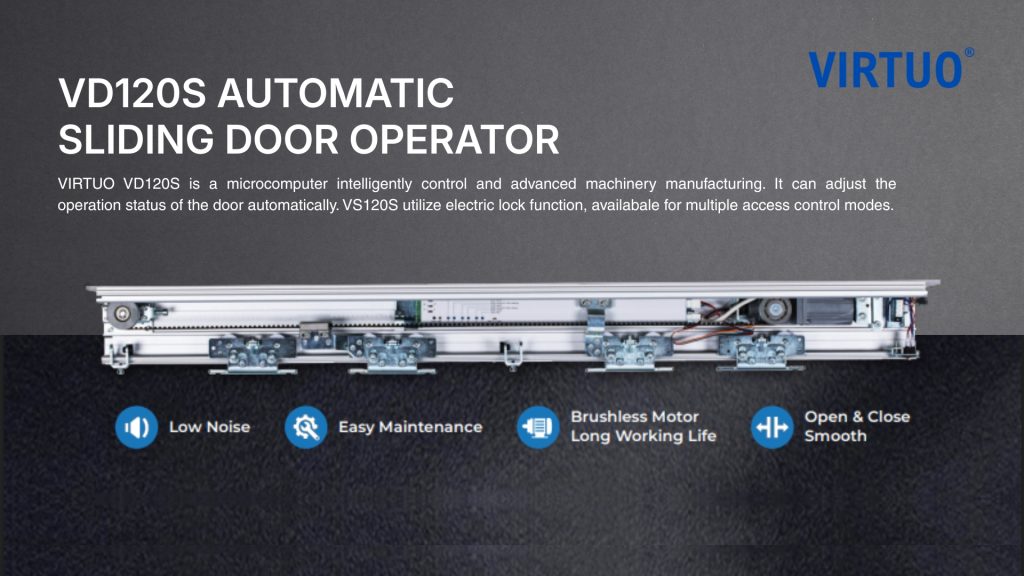
For nursing home facilities demanding an ideal balance of safety, accessibility, and reliability, the VIRTUO VD120S Sliding Auto Door is the premier solution. This system ensures a barrier-free, seamless transition for residents with limited mobility, allowing them to move with dignity and independence.
Beyond ease of access, it can be equipped with integrated access control (add-on) to enhance resident security and operates with whisper-quiet, maintenance-free efficiency to maintain a peaceful environment. It’s more than just a door; it’s a professional entrance designed to build family trust, streamline caregiving workflows, and protect your facility’s investment day after day.
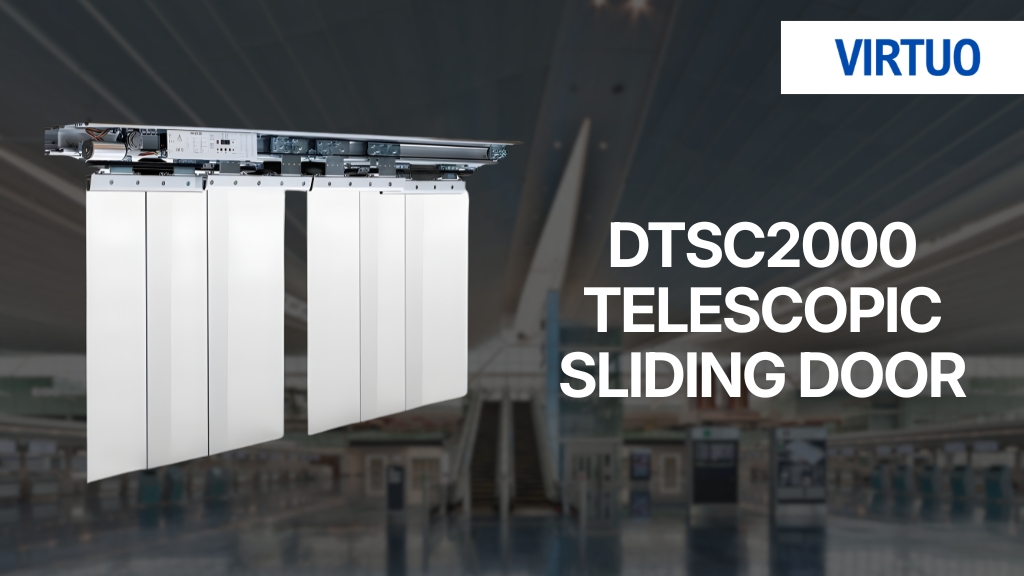
For nursing home facilities requiring maximum accessibility in restricted corridors, the VIRTUO DTSC2000 Telescopic Sliding Door provides the ideal technical solution. By installing two sliding doors within a single door space, this system offers a significantly wider opening to accommodate the seamless passage of wheelchairs and medical equipment.
Engineered for peak efficiency, the dual doors operate simultaneously at a 2-to-1 speed ratio, ensuring better operation and vital time savings for caregiving staff. This whisper-quiet system features adjustable opening speeds, making it a professional, maintenance-free investment that enhances both resident safety and facility flow.
Activation sensors detect approach intent so the door opens. Safety (presence) sensors detect people or objects in the door path so it doesn’t close onto someone.
Not always. Sliding doors are often better for main circulation and entrances. Swing doors can fit where layout or sealing needs make them more suitable.
Touchless doors can reduce one type of high-contact surface, which supports infection prevention efforts. They don’t replace cleaning, hand hygiene, or screening policies.
If you’re mapping an entrance upgrade, start with a walkthrough focused on resident movement, visitor peak times, and where staff get interrupted.
At Lockpro Technology, we specialize in providing and installing sliding auto door across Peninsular Malaysia and Sabah & Sarawak. We’ll help you create a smart and more convenient experience for your home.
Contact us today to learn more about Sliding Auto Door For Nursing Home and how we can support your Auto Door Systems preferences.